
Get borates in their finest form!
For many applications, particle size matters. U.S. Borax offers many of our products in powder grades. Our borate powders are produced using one of the following methods:
Dust recovery: We efficiently collect the dust created when producing our granular products
Screening: We separate the finer particles by sieving
Milling: We use specialized equipment to break particles and reduce their size
Small particles, big benefits
While the median particle size of granular products varies between 300 and 500 microns, powder grades range between 30 and 75 microns.
The smaller particle size means that the surface area increases for a given volume of material compared to larger particles. Smaller particle size and higher surface area provide benefits, such as:
Higher dissolution rate: Whether a borate reacts with other chemicals or is dissolved in a formulation, particle size affects the solubility rate or reaction. Because of the greater surface area, smaller particles react or dissolve at a faster rate.
Better dispersion: When a borate is incorporated into a formulation as a solid, smaller particles mix and disperse more quickly and evenly into the formulation. Smaller particles are also less likely to have an impact on the mechanical properties of the end product.
Potential cost savings: Borate powders can help improve throughput via decreased energy consumption
Powder-grade borates can be used in a variety of precision, industrial applications. In certain industries, borate powders offer specific benefits.
Agriculture
Borate powders work well in agriculture due to smaller particle size, high solubility, and better dispersion of boron content. Borate powders such as Anhybor® Fine have the ability to adhere to the surface of other fertilizers (eg, NPK blends) once mixed with it—providing a boron coating with the aid of a binder.
Ceramics
In the manufacture of industrial boride ceramics—including titanium diboride, zirconium diboride, boron carbide, and boron nitride—borate powders such as Optibor® TP, Optibor TP EF, and U.S. Boric Oxide 200-mesh are highly preferred due to their higher reactivity, better diffusion, and therefore a more efficient boride synthesis process.
Grease lubricant and lubricating oil formulations
When dispersed in a very finely divided state, potassium borates improve the load-carrying, anti-corrosion, and anti-wear properties of industrial and automotive gear lubricants. Under extreme conditions, U.S. Borax Potassium Pentaborate and Potassium Tetraborate interact with metal load-bearing surfaces to form a film of extraordinary resilience. Optibor TP and U.S. Borax Boric Oxide 200-mesh can also be used for automotive lubricating oils due to the requirement of having smaller particles and higher surface area for better lubrication.
Metalworking fluids
Optibor TP and Optibor TP EF (extra fine for finer granulometry) provide better dispersion in the formulation, and higher surface area for lubrication effect.
Nuclear shielding
Borates are essential to the safety and control in nuclear industry applications. U.S. Borax Boric Oxide 200-mesh is incorporated into neutron-shielding polyethylene boards used for radiation-absorption in nuclear power plants and medical radiation therapy.
Oil recovery fluids
When used as a cross-linking agent in oil recovery fluids, Dehybor Fine has higher and faster dissolution than the granular grade and provides a faster reaction with polymers that are utilized to increase the recovery of oil from subterranean formations.
Paints and intumescent coatings
Optibor TP helps meet gloss and rheological requirements in coatings. In addition, U.S. Borax Boric Oxide 200-mesh is used in stop–off paints in the heat treatment and metals industries. The paints are often used in the automotive industry to coat metal engine parts.
Pharmaceutical industry
Borate powders—including Optibor EP P, Optibor NF P, borax decahydrate EP P, and borax decahydrate NF P—can be used to provide better dispersion, solubility, and in some cases, meet the requirement for smaller particles when used as an excipient. U.S. Borax borate powders comply with crucial industry standards and certification requirements:
Certificates of Suitability (CEP)—a certificate of Suitability to the Monographs of the European Pharmacopoeia delivered by EDQM (European Directorate for the Quality of Medicines & HealthCare)—enables pharmaceutical manufacturers to easily administer Marketing Authorization Applications (MAA) for their products and offers optimal cost management and control.
Good Manufacturing Practices (GMP) of Active Pharmaceutical Ingredients certification ensures our manufacturing, laboratory, packaging, storage, and distribution processes all comply with important industry benchmarks.







Technical details
Particles and purity
When it comes to quality, U.S. Borax powdered borates are second to none. Our high standards for borate refinement are critical to prevent contamination of your process, products, and the environment. Like all our products, our borate powders are fully traceable—from production to shipping, including batch, bag and pallet numbers, detailed production data, and quality analyses results.
Powder safety and handling
Powdered borates are non-volatile, non-flammable, and non-explosive. Dust explosion should not occur with borates since they do not react in the presence of oxygen. Borates even inhibit flaming combustion and act as smoke suppressant in case of fire or explosion.
Despite the numerous benefits of powder grade borates, powdered products are much more susceptible to compaction than granular products. Similar to household powders (eg icing sugar), powders often form loose agglomerates quickly when stored. However, these agglomerates disintegrate under hand pressure and this compaction should not be mistaken for hard caking. Our technical support team can help identity whether this is a risk in your application.
Search Safety Data Sheets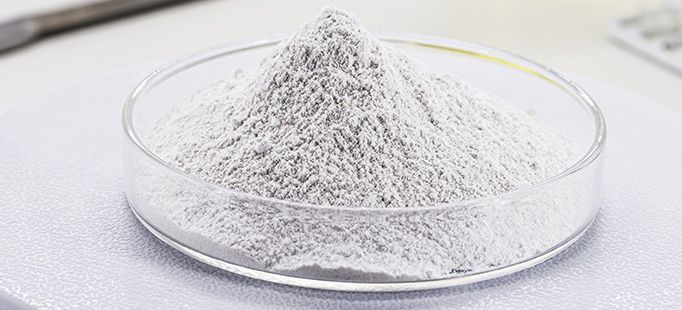


We're here to help with your boron needs.


Get technical support
Your resource for borate-related technical and laboratory services across every industry

Request a sample
Get small quantities of our products to ensure you have what you need for your formulation or process